
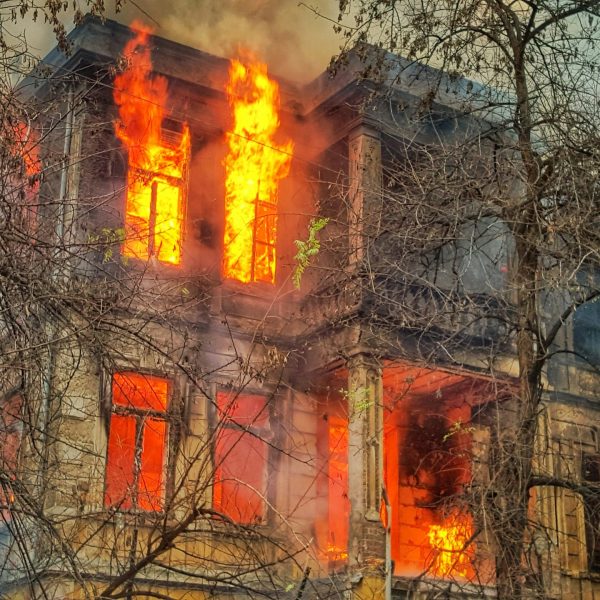
Every fire officer has heard some version of the same warning: don’t make entry decisions based on what you expect to find, make them based on what’s actually in front of you. The problem is that by the time you’re standing in front of the structure, it has already told you most of what you need to know. The only question is whether you were reading it.
The Building Was Talking Before You Got There
Construction type sets the clock before the first hoseline is even pulled. A balloon-frame Victorian, an ordinary-construction strip mall, and a lightweight wood-truss townhouse all fail differently, and they fail on different timelines. Add in age and renovation history. Has this place been chopped up into apartments that were never permitted as such? Is that “single-family” actually three mailboxes and a panel box with six meters? Those details change your read on occupant load and egress before you’ve climbed a single step.
Time of day matters just as much as the structure itself. A residential block at 3 a.m. carries a different life-safety assumption than the same block at 3 p.m., and a commercial occupancy flips that logic entirely. Bars on the windows, plywood over a door, multiple locks on a single entry: all of it is pre-incident information, sitting there in plain sight, well before smoke ever shows.
What the Smoke Is Telling You
Color, volume, velocity, and density (the B-SAHF habit, building, smoke, air track, heat, flame) is still one of the most reliable size-up frameworks because it forces you to read conditions instead of guessing at them. Thin, lazy, gray smoke from one opening is a different fire than thick, black, turbulent smoke pushing hard from three. Velocity tells you about pressure building inside. Density tells you how much fuel is involved. None of this requires you to be inside the structure to know it. It requires you to actually look.
Heat, Flame, and the Things You Feel Before You See
Bowed or crazed glass, scorched paint, a door that’s hot to the touch before you’ve opened it: these are all data points your body picks up faster than your brain can articulate them, which is exactly why they need to be drilled until they’re automatic. Flame location and color add the last layer, telling you where the fire is in its growth and roughly what’s burning. Put together with air track and smoke behavior, this is the difference between an informed entry and a guess with a hoseline attached.
Why This Skill Resists the Classroom
You can lecture on B-SAHF for an hour and an officer still won’t “see” a building correctly the first time they’re standing in front of a real one, because size-up is pattern recognition, and pattern recognition is built from reps, not slides. That’s a real problem for departments that don’t run enough fire calls to build those reps naturally, and it’s exactly the kind of knowledge that gets tested hard on promotional exams, where officers are expected to reason through size-up scenarios they may have only seen a handful of times in the field. It’s also exactly the gap platforms like SimsUshare, the leading fire simulator, were built to close: giving officers a way to rack up size-up reps on demand, instead of waiting on call volume to teach the lesson the hard way.
Building the Read Through Repetition
This is where deliberate, varied practice earns its keep. Run the same officer through a balloon-frame single-family, a strip-mall commercial occupancy, and a lightweight-truss townhouse, in daylight and at night, with different smoke conditions each time, and the pattern recognition starts to form faster than years of low call volume ever would on its own. With SimsUshare, departments can build those scenarios using their own buildings, their own response area, and their own photos, rather than generic stock images, so the conditions officers train on actually look like the conditions they’ll size up on shift. The more realistic and varied the reps, the more the read sharpens, and the less it depends on luck the night it actually counts.
The building is always the first witness on scene. It doesn’t lie, and it doesn’t wait for you to be ready. The only variable is how many times you’ve practiced listening to it before that night comes.
Get Your Officers More Reps with SimsUshare
If your department wants to build this instinct faster, SimsUshare makes it easy to turn your own buildings into size-up and command training scenarios, no real fire required. Start with the Ready-to-Run Free Sim Starter Pack for a turnkey drill you can run this week, or reach out to build a custom scenario set around your response area. Click here to download now.