
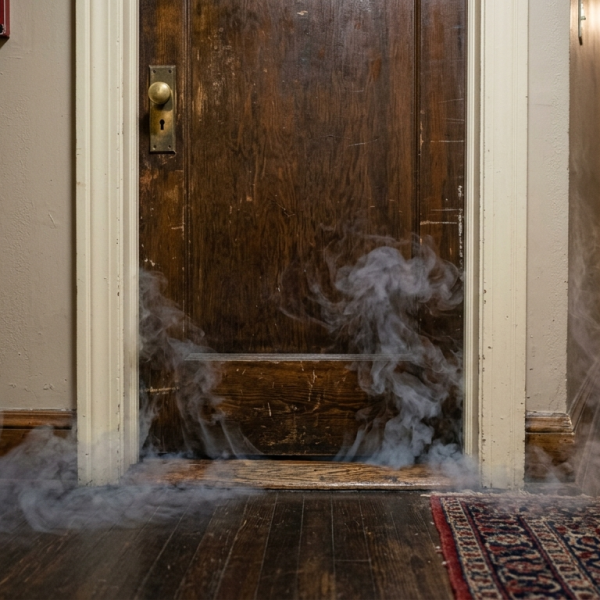
When a fire breaks out, every second matters. Most people know the basics: get out, stay out, call 911. But there is one simple step that can make a major difference during a fire emergency: close the door behind you as you leave.
It sounds small, but a closed door can help slow the spread of fire, heat, and smoke. For fire departments, this is an important public education message because it gives residents a clear, memorable action they can take in one of the most stressful moments of their lives.
Why Closing the Door Matters
Fire grows by feeding on oxygen. When a door is left open, fire and smoke can move more quickly through a home, apartment, school, or commercial building. Closing the door helps limit that flow, which can slow fire spread and reduce the amount of toxic smoke moving into other areas.
Research from the Fire Safety Research Institute’s “Close Before You Doze” campaign has shown just how dramatic the difference can be. In fire testing, rooms with closed doors stayed under 100 degrees Fahrenheit, while rooms with open doors reached more than 1,000 degrees. A closed door can also help reduce carbon monoxide levels and keep conditions more survivable for longer.
That extra time matters. It can give occupants more time to escape. It can give firefighters more time to locate and rescue someone. It can help contain fire damage to a smaller area. And in some cases, it can mean the difference between a survivable space and an unsurvivable one.
Close the Door When Escaping
The message is not only about sleeping with bedroom doors closed, although that is important too. It is also about what people should do when they are actively leaving a building during a fire.
If it is safe to do so, residents should close doors behind them as they exit. The U.S. Fire Administration specifically advises people in apartment and high-rise fires to leave, close the door behind them, pull the fire alarm, and use the stairs to get out.
For the public, this can be taught as a simple phrase:
Get out. Close the door. Call 911. Stay out.
The goal is not to slow anyone down or encourage people to take risks. The message should always be clear: life safety comes first. Do not go back for pets, belongings, or to close a door you already passed. But when closing a door is part of the natural exit path, it can help protect everyone in the building.
Why Fire Departments Should Teach This More Often
Fire departments are trusted messengers in their communities. When firefighters explain why closing a door matters, people listen.
Public education often focuses on smoke alarms, escape plans, and calling 911. Those messages are essential, but “close the door” deserves a regular place alongside them. It is easy to understand, easy to remember, and easy to practice.
Departments can build this message into:
- Community fire safety talks
- School visits
- Open houses
- Fire Prevention Week campaigns
- Social media posts
- Apartment and senior living outreach
- Home safety check programs
- Post-incident education
The key is repetition. People are more likely to remember this step during an emergency if they have heard it many times before and practiced it as part of their escape plan.
Make the Lesson Visual
Closing a door is a simple action, but the reason behind it is highly visual. Firefighters understand flow path, smoke movement, heat conditions, and compartmentation. The public usually does not.
That is why visual education is so powerful. Instead of only telling residents that a closed door can help, departments can show them what happens when fire and smoke move through a structure with doors open versus closed.
This is where simulation-based training and public education can work together. Fire departments can use fire simulation software to demonstrate how quickly smoke can travel through hallways, stairwells, bedrooms, and commercial spaces when doors are left open. They can also show how closing a door may help contain conditions and protect other rooms or exit paths.
For residents, seeing the difference makes the lesson stick.
Turning Public Education Into Action
The best fire safety messages are the ones people can actually use. “Close the door behind you” works because it is specific. It does not require equipment. It does not require technical knowledge. It simply gives people one more tool to protect themselves and others.
Fire departments can make the message even more actionable by connecting it to escape planning:
- Practice two ways out of every room.
- Sleep with bedroom doors closed.
- Feel doors for heat before opening them.
- Close doors behind you as you leave, when safe.
- Once outside, stay outside.
- Call 911 from a safe location.
NFPA recommends that families create and practice a home fire escape plan with two ways out of each room and working smoke alarms marked on the plan. Adding “close doors behind you” to that practice helps turn the habit into muscle memory.
A Small Habit With a Big Impact
In a fire, people do not rise to the occasion. They fall back on what they have practiced and what they remember.
That is why fire departments play such an important role in teaching simple, repeatable behaviors before an emergency happens. Closing the door behind you may seem like a small step, but it can slow the spread of smoke and fire, improve conditions for occupants, and support safer fireground operations.
For departments looking to strengthen community education, this is a message worth repeating often:
When there is a fire, get out quickly. Close the door behind you if you can. Call 911. Stay out.
Small actions can save lives. This is one of them.