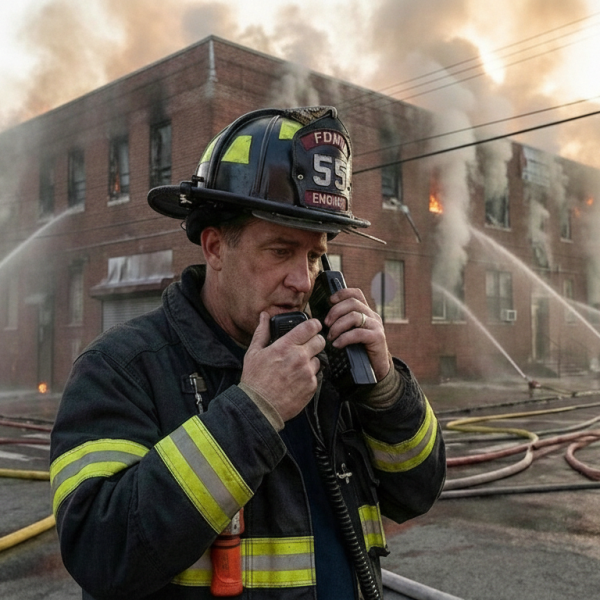
You arrive to a working structure fire and everything is pushing you toward speed.
The crew wants an assignment. Bystanders are shouting. Smoke is showing. Radio traffic is building. It’s easy to feel like the fastest officer is the best officer.
But here’s the problem:
A fast decision made with a partial picture is how blind spots turn into fireground problems.
That missing information is what we’ll call the 360 Gap—the space between what you think you have from Side A and what the building is actually doing on all four sides.
A 360° size-up is a rapid walk-around to evaluate fire location and extension, building construction, smoke and fire behavior, access points, utilities, victim potential, and structural integrity. It’s not a delay—it’s the quickest way to eliminate guesswork before you commit crews.
When the 360 Gap shows up, the same failures repeat.
1) Hidden fire becomes a crew problem
What looks like a simple room-and-contents fire from the front is often something else entirely:
- Basement involvement undermining the first floor
- Fire running an attic or cockloft
- Rear additions lighting off (often lightweight construction)
- Extension into concealed spaces that aren’t visible from Side A
When crews go interior without knowing this, you can put them above heavy fire, in rapidly changing conditions, or on a line that can’t actually control the seat.
The first 60 seconds decides whether the interior stays survivable. The 360 closes that gap.
2) Victim clues are rarely on Side A
If you only size-up from the front, you’re often guessing where the real life hazard is. Side C is where you frequently find:
- Bedrooms and likely sleeping areas
- Secondary exits that are blocked or unusable
- Window bars or security doors that change rescue options
- Bystanders pointing to the rear: “They’re in the back!”
A fast lap can redirect search to where it matters most—and keep you from wasting the first critical minutes searching the most convenient space instead of the most likely space.
3) The 360 Gap creates tactical errors
This is where “good effort” turns into “why isn’t this working?”
Without a full picture, common errors include:
- Stretching the first line to the wrong door
- Attacking from the wrong side of the fire
- Missing rear or basement access that would simplify the job
- Ventilation that unintentionally feeds the fire or creates a flow path over crews
The 360 reduces the need for mid-stream corrections—because the plan starts right.
4) Collapse indicators don’t announce themselves from the front
Some of the biggest warning signs are easiest to see from the sides and rear:
- Fire involvement under porches/decks compromising supports
- Bowed walls or separation cracks
- Lightweight rear additions failing early
- Sagging roof lines or truss involvement indicators
- Basement fire indicators that threaten floor integrity
This information should influence whether you stay offensive, change your entry point, adjust your collapse zones, or go defensive.
5) Incomplete information leads to incomplete command decisions
The initial size-up drives the entire incident:
- Strategy (offensive vs. defensive)
- Line placement and water supply decisions
- Search priorities
- Ventilation timing and coordination
- Resource requests and additional alarms
- Risk assessment and operational tempo
If the 360 isn’t completed, command is forced to make big commitments based on partial truth—which leads to delayed alarms, misallocated crews, and interior operations that become unsafe fast.
Bottom Line
A 360° size-up takes seconds. But those seconds close the 360 Gap—the blind spots that create avoidable fireground problems.
Treat the 360 as a standard, not a suggestion.
Because in structure fires, what you don’t see can hurt you.
Summary: What the 360 Most Often Reveals
Here are key findings that frequently show up during the lap—and regularly change tactics:
- Basement or attic involvement not visible from Side A
- Rear additions (often lightweight) with rapid extension potential
- Walkout basement access that improves attack and search options
- Victim indicators and true bedroom locations
- Security features (bars, gated yards, blocked egress)
- Flow path issues (open doors/windows on other sides, wind effects)
- Utility hazards (gas meter placement, propane, electrical drop risks, solar components)
- Exposure threats (close Bravo/Delta structures, rear sheds/garages)
- Collapse indicators (porch failure, bowed walls, roof sag, compromised floors)
Close the 360 Gap before it closes on you!
Download our free 360° Size-Up Checkoff Form, a fast, field-ready tool designed to help officers capture critical information on every side of the building before crews are committed.